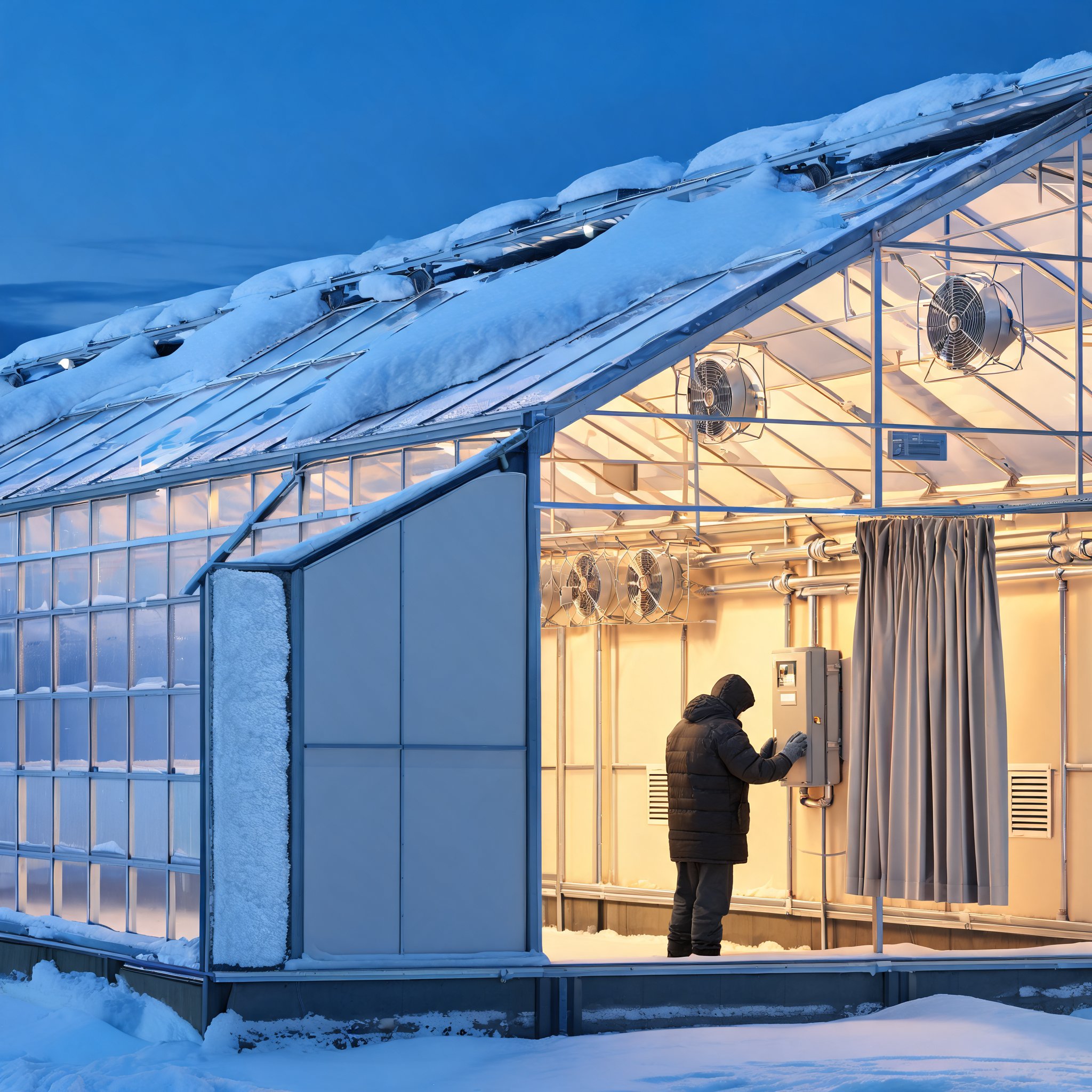
A seasonal checklist for commercial growers treats winter preparation as an operational program, not only a heating task. The aim is to reduce downtime, protect crop quality, control energy use and keep structures and environmental systems performing when outside conditions become less forgiving. A thorough inspection before severe weather gives the team time to correct problems before they affect production.
Inspect the structure and envelope
The greenhouse structure should be checked inside and out for damaged or loose components. Framing connections, doors, vents, glazing systems, poly coverings, seals and exterior parts can show wear after wind, snow, ice and temperature swings. Pay particular attention to places where air or moisture can enter: damaged weather stripping, aging seals, loose panels and gaps around doors or vents can increase heat loss and complicate environmental control.
Polyethylene-covered houses need checks for punctures, tears, looseness or deterioration, and inflated double-poly systems should be checked for proper inflation. Snow and wind requirements vary by location and design, so components should be maintained according to the building’s intended design and local requirements. If structural condition or winter loading is a concern, the checklist advises involving the greenhouse manufacturer or a qualified professional before a major storm.
Service heating and environmental controls
A heating failure during a January cold snap can become an operational emergency, so the entire heating system should be inspected and manufacturer-recommended service completed before temperatures drop. Boilers, unit heaters, radiant systems, pumps, fans, thermostats, sensors and distribution equipment should all operate as intended.
- Inspect heating equipment for visible wear or operating issues.
- Check thermostats and environmental sensors.
- Test circulation and horizontal airflow fans.
- Confirm that vents and louvers open and close correctly.
- Inspect control systems, alarms and backup systems.
- Check fuel supplies or fuel delivery arrangements where applicable.
- Review generator or emergency power procedures.
Environmental controls need attention because winter management is rarely about heating alone; humidity, airflow, ventilation and temperature interact. Reducing ventilation too aggressively to conserve heat can create humidity problems, condensation and uneven growing conditions. The goal is to maintain the crop’s required environment while operating the greenhouse as efficiently as practical.
Find heat losses and protect airflow
Heating is often one of the largest winter operating demands, making small efficiency problems worth finding before the coldest weather. The building envelope should be inspected for escaping conditioned air, including doors that do not close properly, worn seals, gaps around penetrations, damaged glazing and poorly maintained vents. Where installed, retractable energy curtains or thermal screens need checks of the material, drive system, cables, motors, sensors and controls.
Some growers add inflated polyethylene over polycarbonate or glass sidewalls and gable ends for extra insulation during colder months, where appropriate for the greenhouse design and operation. Equipment and storage areas should also be kept from interfering with airflow or heat distribution; otherwise a working heating system can still produce inconsistent temperatures. It is also a good time to review whether the greenhouse is still operated as originally designed, because production layouts, crops, benches and structures change.
Prepare for storms and snow removal
A winter plan should cover severe weather as well as routine maintenance. The team should know who monitors snow accumulation, heating equipment, alarms, backup power, vents and other critical systems during storms or extreme cold. Gutters, drainage paths and areas around the greenhouse should be kept clear where practical so melting snow and ice can drain, and doors and emergency exits should be inspected to confirm winter weather will not prevent access.
In snow-prone climates, growers may consider dedicated gutter snow-melt piping beneath the gutters. It can operate as its own heating zone and be activated when snow or ice is present on the roof or in the gutters; by supplying heat where melting is needed, it may allow energy curtains or blackout systems to remain closed rather than opening them to let greenhouse heat reach the roof. Snow removal should follow recommendations for the specific greenhouse design, because improper removal can damage coverings or structural components, and unnecessary personnel activity on or around a snow-loaded greenhouse can create safety risks. Operators should understand the snow and wind conditions their greenhouse was designed to handle and have a response plan for unusual weather.