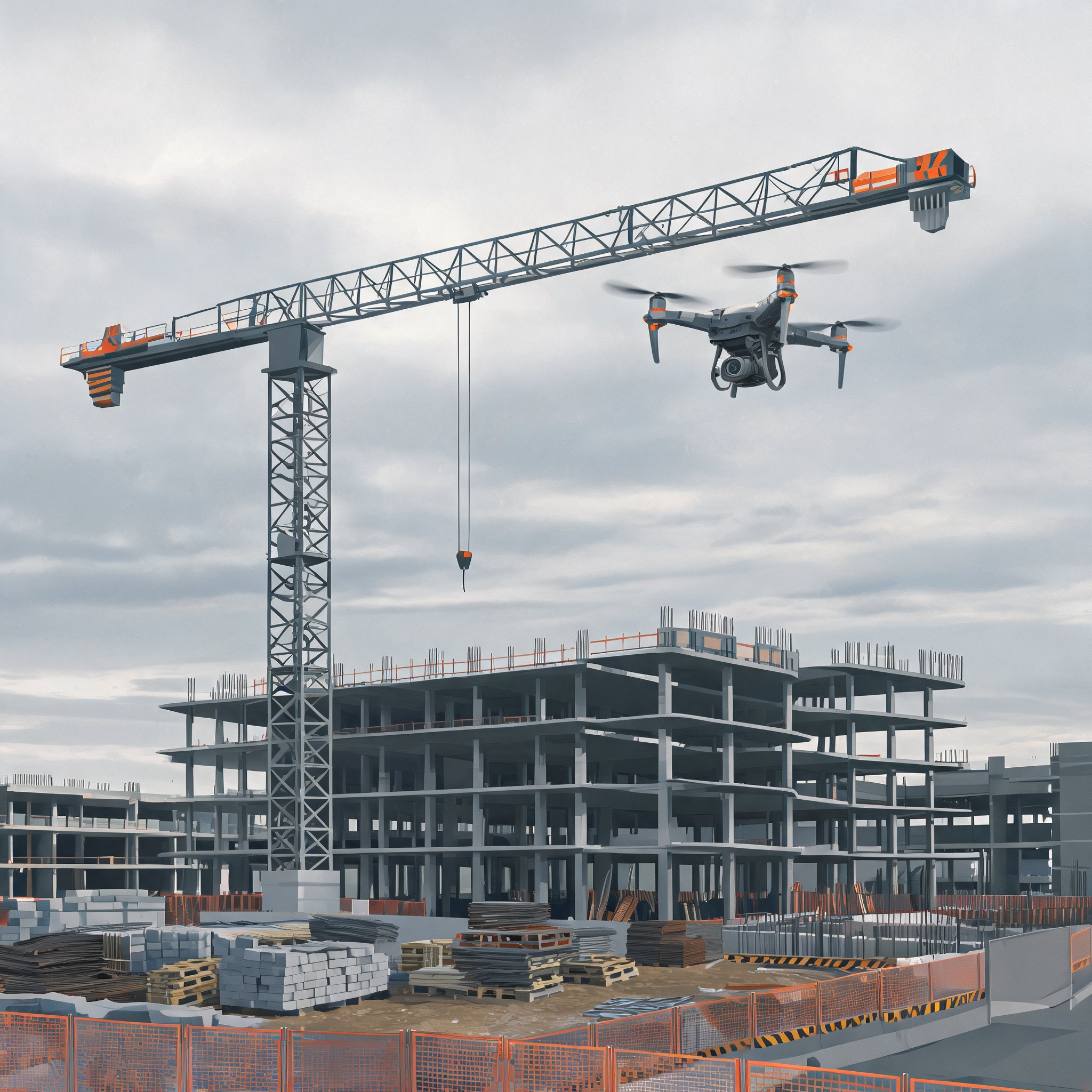
A drone on an aerial survey flight struck the top of a tower crane at a construction site in Manchester and fell 120 m to the ground, the Air Accidents Investigation Branch has recorded.
The incident happened in August at a site in the Cheetham Hill area of the city. It was notified to the AAIB, but no formal probe was launched, and neither the site nor the contractor was identified.
What the bulletin records
In its latest bulletin the AAIB said the drone was “carrying out an aerial survey using a pre-selected flight path over a construction site in an urban area”. The obstacle avoidance feature was enabled.
Despite that setting, the aircraft struck the top of the crane and fell 120 m. The bulletin records the collision and the fall but describes no damage on the ground and no injuries.
Company review
An internal investigation by the construction company concluded that the company and its remote pilots “may not have fully understood the limitations of the obstacle avoidance software”, the AAIB said. The review therefore looked at how well the crew understood what the avoidance function could and could not do.
The flight had been planned along a fixed route over an urban site, where a crane jib rises above the working area being surveyed. Because the occurrence was notified rather than formally investigated, published detail is limited to the bulletin entry and the company's own findings.
The bulletin does not give the aircraft type, the purpose of the survey, the height of the crane or the separation between the planned path and the jib.
What the bulletin does establish is the sequence: a pre-planned survey flight in an urban area, obstacle avoidance enabled, a collision with the top of the crane and a 120 m fall to the ground.