Germany’s Federal Agency for Disruptive Innovation (SPRIND) is investing an undisclosed amount in Aachen-based battery recycling specialist Cylib and will become a shareholder. The backing is intended to help Cylib develop its recycling technology and scale it to industrial maturity.
Cylib was founded in 2022 and is moving toward commercialisation. Its hydrometallurgical recycling plant is under construction in Dormagen, North Rhine-Westphalia. Since September 2026, the company has also been accepting end-of-life electric-vehicle batteries at its first industrial site in Wernberg-Köblitz, Upper Palatinate, where it processes them into black mass. That facility is being ramped up gradually and is designed for up to 10,000 tonnes per year.
Lithium recovery at the front of the process
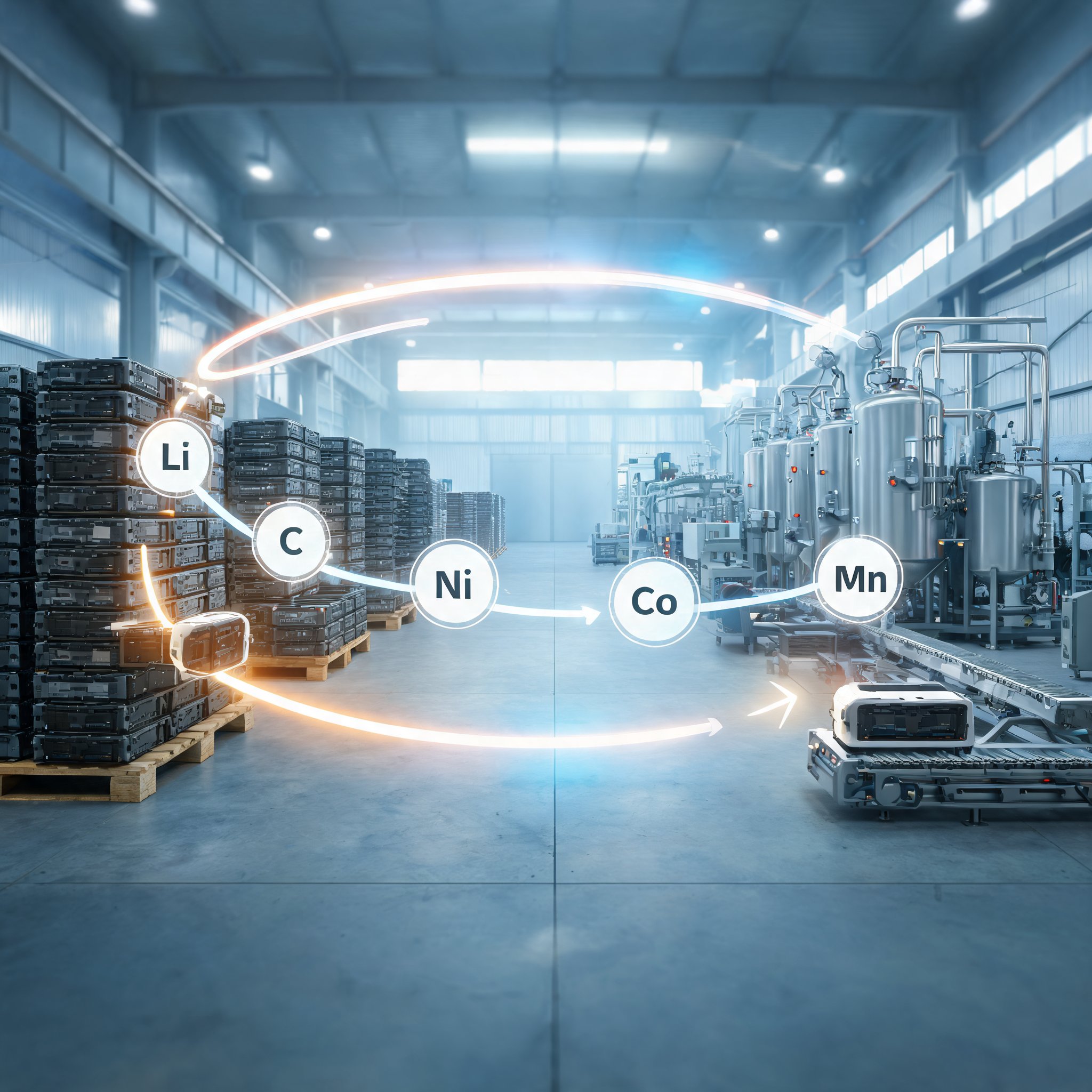
Cylib’s process is based on research at RWTH Aachen. Older recycling approaches concentrated on nickel and cobalt, while lithium was recovered only at the end of the chain or lost in slag. Cylib says its water-based OLiC process — Optimised Lithium and Graphite Recovery — recovers lithium in the first steps from black mass. The company reports recovery rates above 90% for lithium, graphite, nickel, cobalt and manganese.
Dr. Lilian Schwich, co-CEO and co-founder of Cylib, said the technology began in research and has been developed to the threshold of industrialisation. She said SPRIND brings a partner that understands the importance of technological innovation for critical value chains and what is needed to bring it to market.
Olav Carlsen, innovation manager at SPRIND, said breakthrough innovations do not only happen in the lab; they also occur where a technology makes a new market possible. He said Cylib has the technological foundation to create a large-scale industrial market for battery materials that remain in circulation in Europe, strengthening Germany’s and Europe’s sovereignty in critical raw materials.
Pilot with Porsche and EU designation
The practical viability of Cylib’s process is illustrated by a pilot project involving the startup, Porsche and other partners. Porsche announced in September that cathode active material made entirely from recycled raw materials, sourced from its own high-voltage batteries, had been produced for the first time. Cells made from that material are now undergoing testing.
The Dormagen plant will recover raw materials. Cylib is building it as a large-scale hydrometallurgical facility. The project is classified as a “Strategic Project” under the EU’s Critical Raw Materials Act.
The company argues that Europe has limited access to its own supplies of raw materials critical for battery production, while the number of end-of-life EV batteries rises each year. Cylib’s goal is to keep those materials in a closed loop, returning them from spent batteries to new value creation. The SPRIND investment is intended to support that scale-up, though the amount was not disclosed.