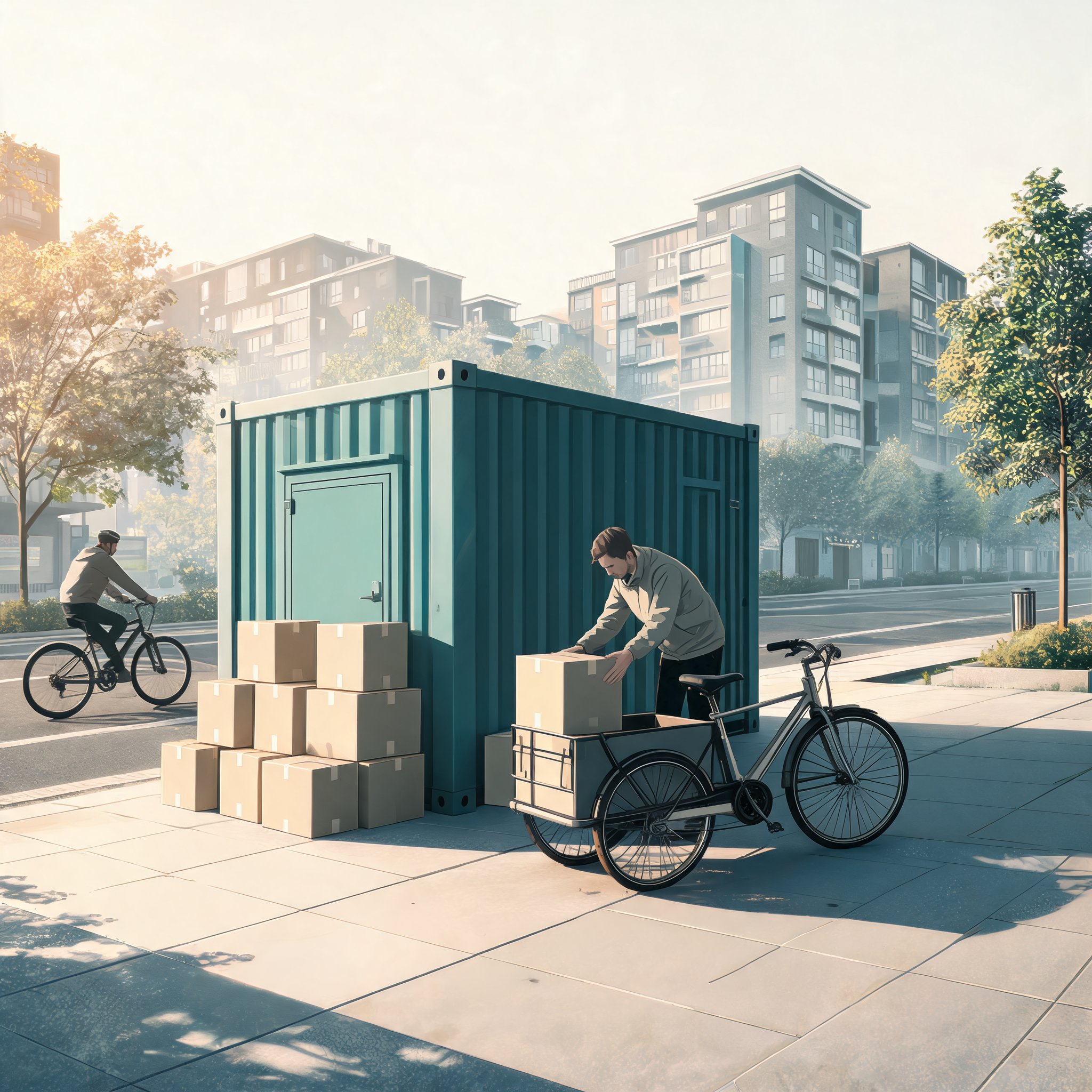
Omniva has opened its first MicroHUB in Tallinn, adding a container-based facility to its parcel delivery operations. The specially adapted container is equipped with security systems and is located within a courier’s delivery area rather than at a sorting centre.
The international technology and logistics group says the hub is intended to reduce van journeys in Tallinn. Couriers are expected to save time and get parcels to customers faster, while the arrangement is meant to support greener urban logistics.
Under the operating model, couriers can collect additional parcels during their rounds without making a lengthy return trip to a sorting centre. Omniva says this allows it to use more cargo bikes instead of vans for parcel deliveries.
The arrangement is designed around a practical constraint in parcel delivery: couriers need to reload during a shift. By placing the container inside the delivery area, Omniva aims to shorten those reloading trips and keep more of each round focused on serving customers.
Omniva expects the first results from the pilot within a month. Those results will help the company determine its next steps. In the next phase, it plans to test parcel collection from the MicroHUB with Crowd Delivery couriers.
Any wider rollout remains conditional. If the Tallinn pilot is successful, Omniva plans to introduce more MicroHUBs in the city and a similar solution in Riga, Vilnius and Kaunas. Those are stated plans, not confirmed outcomes of the current trial.
Hannes Falten, head of delivery innovation at Omniva, said initial estimates suggest that a MicroHUB could save each courier up to three hours a day and allow them to serve around 20 additional customers. He described the approach as an opportunity to handle growing parcel volumes without putting more vans on city streets, moving toward smarter logistics with a smaller environmental footprint. These figures are estimates tied to the pilot.
The company is positioning the MicroHUB as a way to manage higher parcel volumes while limiting the number of vans deployed on city streets. It says the model should contribute to a smaller environmental footprint, although the pilot results will show how much time and vehicle use can actually be saved.
The first hub also has a visual element. Its exterior was painted by street artist S-Boy’s team to bring more colour and character to the neighbourhood and give passers-by something worth stopping to look at.
The trial will be watched for whether the local reloading model delivers the expected time savings and supports higher cargo-bike use. Its results will inform decisions on the proposed expansion, with the company linking the concept to growing parcel volumes and lower environmental impact.