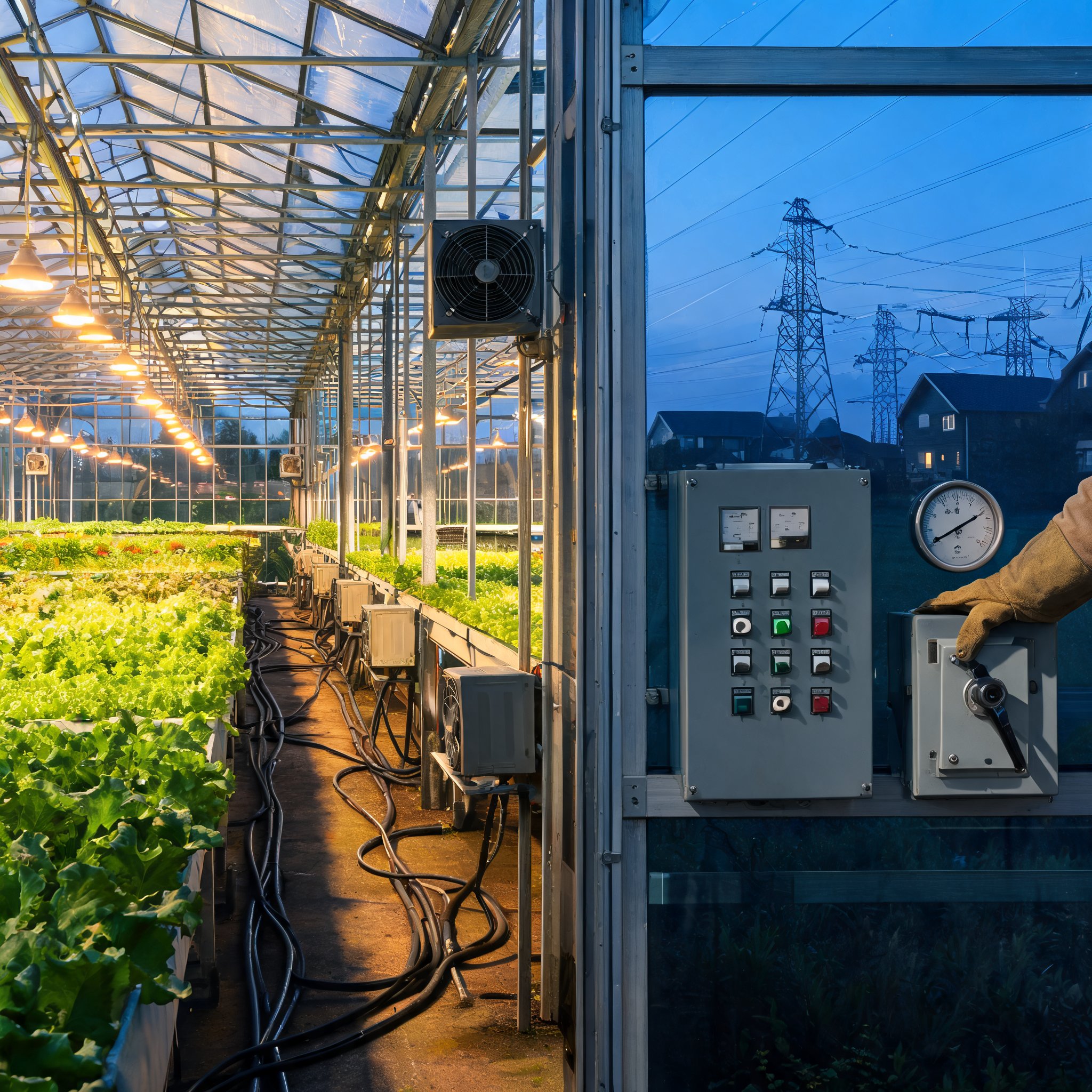
Greenhouse operators may know their utility has an emergency plan for cutting power, but far fewer have a plan of their own for keeping the crop alive when the grid is stressed, according to Ian Knisely, an energy analyst at Energy Bridge Advisors.
Knisely points to a detail on California utility bills: a rotating outage group or block that shows where a customer stands in line if the grid runs short. Every grower has a place in that line whether or not it is printed on the bill, he writes. Federal reliability standards, including NERC’s EOP-011, require grid operators nationwide to maintain emergency plans for cutting load, but California is unusual in printing the information directly on the bill.
Those plans are designed to protect critical facilities such as hospitals where possible. Other customers, including greenhouses, can still lose power, often with only minutes of warning. Rolling outages have hit several regions in recent years during heat waves and winter storms. For a greenhouse, that can mean fans, pumps, irrigation, heating and controls going dark at the worst possible time.
Knisely distinguishes an outage from a curtailment by control. In an outage, everything stops at once. In a planned curtailment, the grower decides in advance which loads drop, by how much, and which stay on to protect the crop.
Four steps to a curtailment plan
A curtailment plan is a written playbook for hours when the grid is under strain. Knisely outlines four steps.
- List major equipment and its draw. The inventory should cover supplemental lighting, fans, evaporative cooling, heating, pumps, dehumidification, controls and any cold storage.
- Sort loads by priority. Some equipment can be shut off entirely for a few hours without harming the crop. Some can be reduced by dimming lights, staggering fans or adjusting a setpoint a few degrees. Controls, alarms and whatever keeps the most sensitive crop alive must stay on. The sorting depends on the crop and its stage, so it can change through the season.
- Set triggers. An outage order may arrive with minutes of notice, but heat waves and cold snaps are forecast days ahead and grid operators usually issue public alerts before an emergency. In summer, growers can pre-cool in the morning, irrigate early and close shade curtains before the afternoon peak. In winter, they can heat ahead of the cold peak, close thermal curtains early and make sure backup heat is fueled and tested.
- Assign roles. Growers should decide who receives the alert, who makes the decision and who carries it out. If an environmental controller can run the sequence automatically, it should be programmed and tested. A plan that depends on one person answering a phone at 4 p.m. on a Saturday is not a plan, Knisely writes.
After those steps, a grower should know how many kilowatts can be given up, for how long and at what cost to the crop. That figure is what the grid is willing to pay for, according to Knisely.
Utilities and grid operators prefer to pay customers who agree in advance to cut load before ordering outages, because a megawatt that disappears on request is cheaper than one bought at emergency prices. That market is demand response, and it exists in most of the country, largely so the outage plan never has to be used.
Knisely advises growers to ask their utility where their site falls in its plan and then start making their own.