The global market for solution styrene-butadiene rubber (S-SBR) is projected to rise from an estimated US$4.2 billion in 2024 to US$6 billion by 2030, a compound annual growth rate of 6.1%, according to a November 2026 report published by Research and Markets.
The publisher links the outlook to growing demand for high-performance and fuel-efficient tires, advances in rubber manufacturing technology and expanding applications across the automotive, footwear, adhesives and polymer modification industries.
Tire applications dominate the forecast
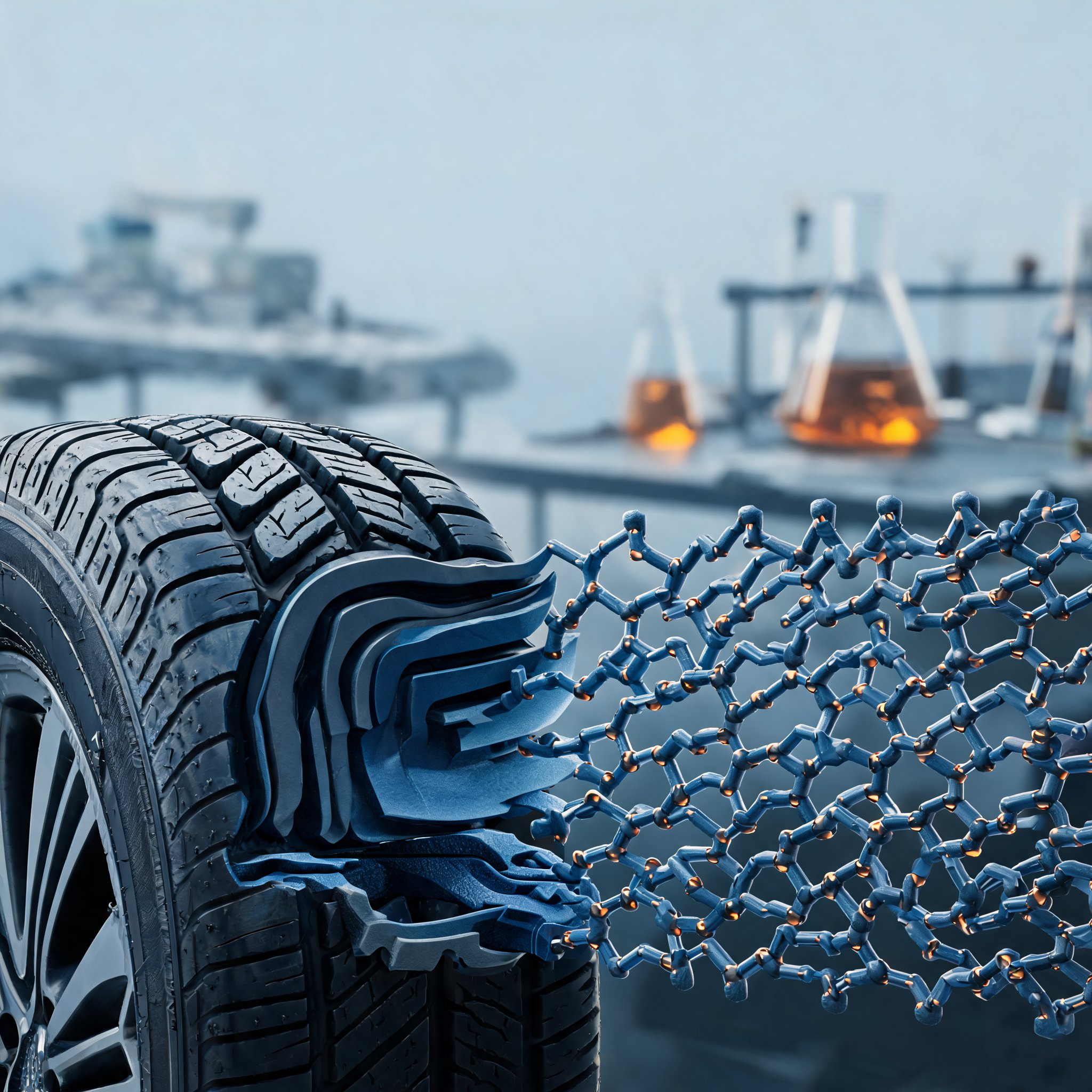
S-SBR is a synthetic rubber valued for high abrasion resistance, tensile strength and flexibility. Those characteristics make it an important material in high-performance tire manufacturing, where the report says it contributes to improved fuel efficiency, enhanced wet grip and reduced rolling resistance compared with traditional rubber materials.
Tires are the largest and fastest-growing application covered in the study, with the segment projected to reach US$4.7 billion by 2030 at a CAGR of 6.5%. The automotive industry is expected to remain the main source of demand over the forecast period, as demand for tires offering better safety, durability and fuel efficiency encourages manufacturers to adopt advanced rubber materials.
Electric vehicles and construction among adjacent opportunities
The report also flags the spread of electric vehicles as an additional opportunity, identifying expanding EV production and sales as a factor that could increase S-SBR use in electric vehicle tires. Outside tires, footwear is projected to grow at a CAGR of 5.7%, supported by demand for durable and flexible materials.
S-SBR is also used in adhesives and sealants, polymer modification and other industrial applications. The report highlights opportunities linked to the adhesives and sealants industry as well as the recovery of the global construction sector, noting that greater infrastructure investment, construction activity and urbanization could support demand for construction-related materials.
Polymerization and filler developments
Developments in polymerization and processing are extending what the material can do. New polymerization techniques allow manufacturers to tailor rubber grades to specific applications, while nanotechnology and advanced fillers help improve mechanical performance and durability. Improvements in solution polymerization and advanced mixing processes are also cited as ways to raise production efficiency and product quality.
Research and development spending by major industry participants is expected to support further innovation and create additional opportunities for market expansion, the report adds.
Regional outlook
The United States market was valued at US$799.4 million in 2024. China is forecast to grow at a CAGR of 7.9% and reach US$1.2 billion by 2030. The report also examines Japan, Canada, Germany, France, Italy, the United Kingdom, India, South Korea and other countries and regions, describing Asia-Pacific as an important growth region while North America and Europe also represent significant opportunities.
Competitive landscape and constraints
ARLANXEO Holding, Asahi Kasei, Chi Mei, Dynasol Group, Goodyear, JSR, LANXESS, LG Chem, SIBUR International, Sinopec, Sumitomo Chemical Asia, Synthos, Taiwan Synthetic Rubber, Trinseo and Versalis are among the companies identified in the report, with vertical integration and a strategic focus on tire applications named as competitive strategies.
The outlook is not without constraints. International trade developments, supply chain disruptions and economic uncertainty are cited as challenges for the S-SBR market. The November 2026 edition incorporates updated analysis of tariff developments across more than 180 countries and their potential effects on sourcing, supply chains and geographic market positioning, alongside revised forecasts through 2030, historical market performance from 2015 to 2023 and competitive market share estimates for 2025.