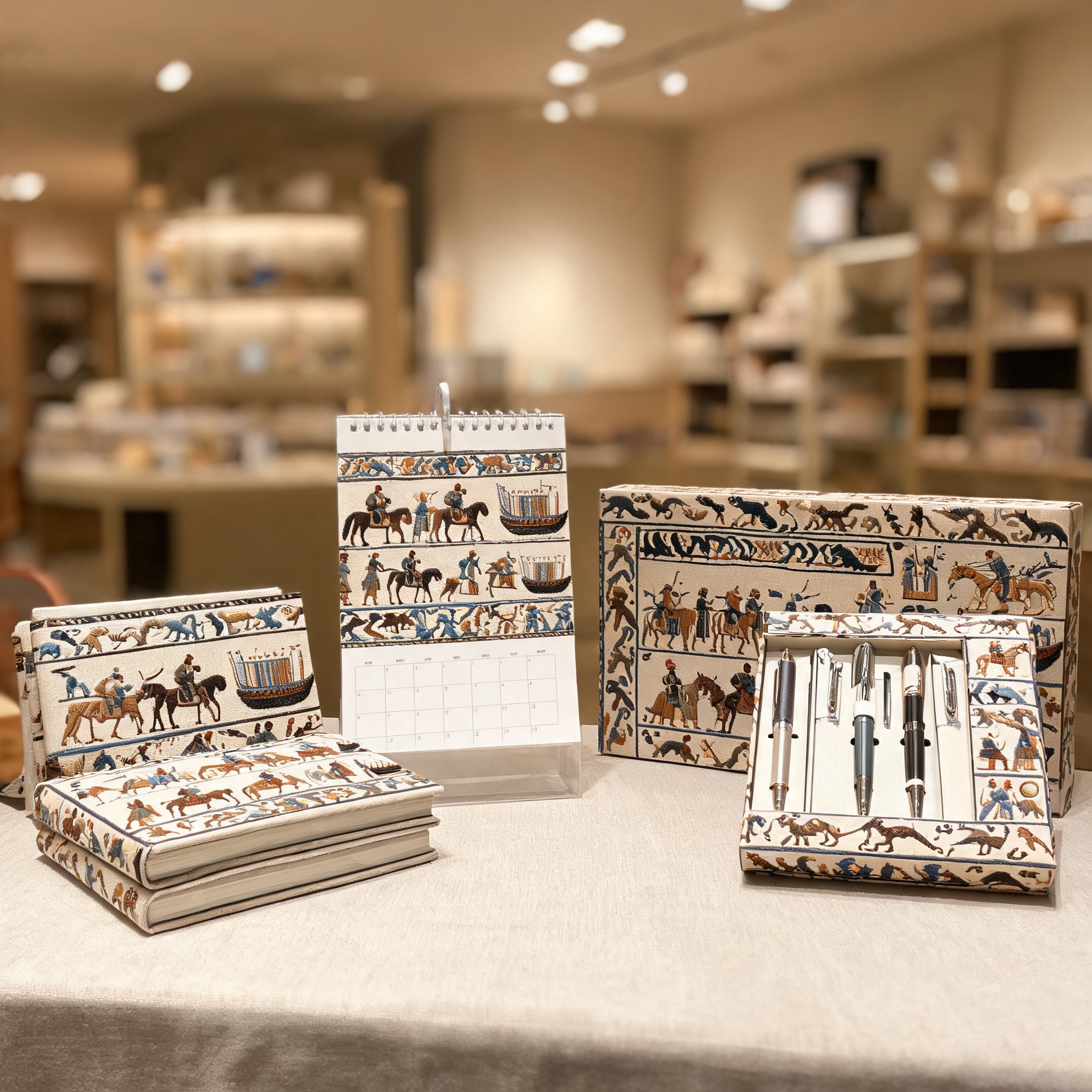
Flame Tree Publishing has announced an exclusive collection developed with the British Museum that uses artwork from the Bayeux Tapestry on stationery and gifts. The launch is tied to the tapestry’s display at the museum and to its return to England for the first time in almost 1,000 years.
The range includes notebooks, art calendars, jigsaw puzzles and gift-boxed pens. According to the announcement, the products are intended to bring one of the most remarkable works of medieval art to museum visitors through designed stationery and gift items. The collection is available at the British Museum gift shops for the duration of the exhibition, from 10 September 2026 to 11 July 2027.
Museum collaboration
Angela Pountney, Head of Buying at the British Museum, said the museum was delighted to work with Flame Tree on the notebooks, art calendars, jigsaw puzzles and gift-boxed pens for what the museum called a popular and significant exhibition. The collection is an exclusive collaboration with the museum.
The historic work
The Bayeux Tapestry dates from the 11th century and is an embroidered work measuring almost 70 metres in length. It depicts the events leading up to the Norman Conquest of England in 1066, including the Battle of Hastings. Its detailed scenes of people, animals, ships and battles provide a view of medieval life, and its display at the British Museum gives visitors the opportunity to see the work in person.
The museum has described the tapestry’s display as a significant cultural moment. The work’s return to England after almost 1,000 years is central to the collection’s timing, and the product range draws on its imagery for objects intended for the museum’s exhibition audience.
The announced products span several gift and stationery categories. Notebooks and art calendars carry the tapestry’s artwork into paper goods, while jigsaw puzzles and gift-boxed pens extend the range into leisure and writing products. The collection is available during the exhibition period, giving it a defined retail window alongside the museum display.
Flame Tree Publishing’s collection uses the historic work as the basis for a product line rather than a standalone publication. The announcement names notebooks, art calendars, jigsaw puzzles and gift-boxed pens, with the museum gift shops providing the point of sale during the exhibition.
The collaboration draws on a work that is both a historical artwork and a recognised example of medieval embroidery. Its narrative scenes cover the period before the Norman Conquest, and the museum presentation is intended to let visitors encounter the original work while the related collection offers themed items in the gift shops.