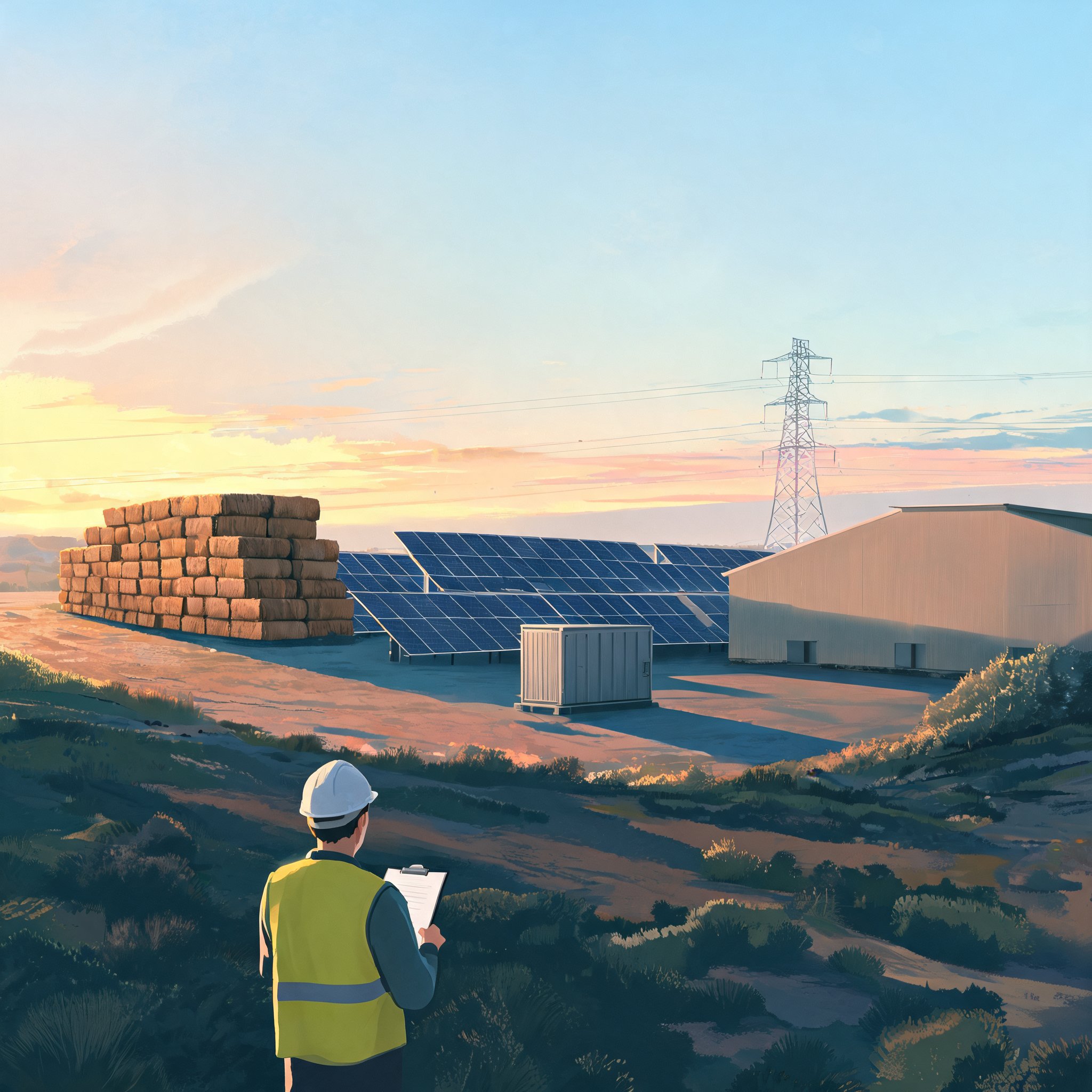
The Republic of the Congo has begun a study of electricity supply needs for its special economic zones (SEZs) and industrial facilities, launched earlier this week by Michel Djombo, the country's Minister of Industrial Development, SEZs and Private Sector Promotion. The work is intended to identify suitable supply solutions as national electricity demand rises.
The study is being conducted under the supervision of the Ministry of Energy and Hydraulics, implemented by the National Agency for Rural Electrification and supported technically by the United Nations Development Programme.
Four supply approaches under comparison
The assessment will compare four potential routes for meeting industrial electricity demand:
- Solar generation paired with battery storage
- Biomass and cogeneration using agricultural, forestry and agro-industrial residues
- Connections to the national grid where capacity is available
- Hybrid energy systems combining more than one source
It is also expected to establish a pricing benchmark for energy solutions in the Congolese industrial market.
Price concerns and diesel reliance
Speaking at the launch event, Djombo questioned solar electricity offers priced between XAF 130 ($0.22) and XAF 150/kWh, describing some of them as opportunistic. He said international comparisons would help establish fair and sustainable pricing.
The minister also highlighted the cost of relying on diesel generators when electricity supply is disrupted, saying the resulting price can reach almost XAF 200/kWh. Supply constraints are affecting industrial operators, he continued, with some companies reportedly having to suspend production lines.
Despite the high diesel prices, Djombo said some industrial operators remain reluctant to commit to alternative energy solutions and are waiting for market conditions to become clearer.
Commercial models and bankable projects
The initiative also plans to examine different commercial arrangements for supplying industrial customers, including turnkey installations financed directly by businesses, financing services for equipment purchases and the introduction of independent power producers. It is expected to identify bankable projects capable of attracting public and private investment.
According to figures in the project database of the Africa Solar Industry Association (AFSIA), the Republic of the Congo has 35.6 MW of operational solar to date, of which 27 MW is listed as unidentified commercial and industrial (C&I) projects.