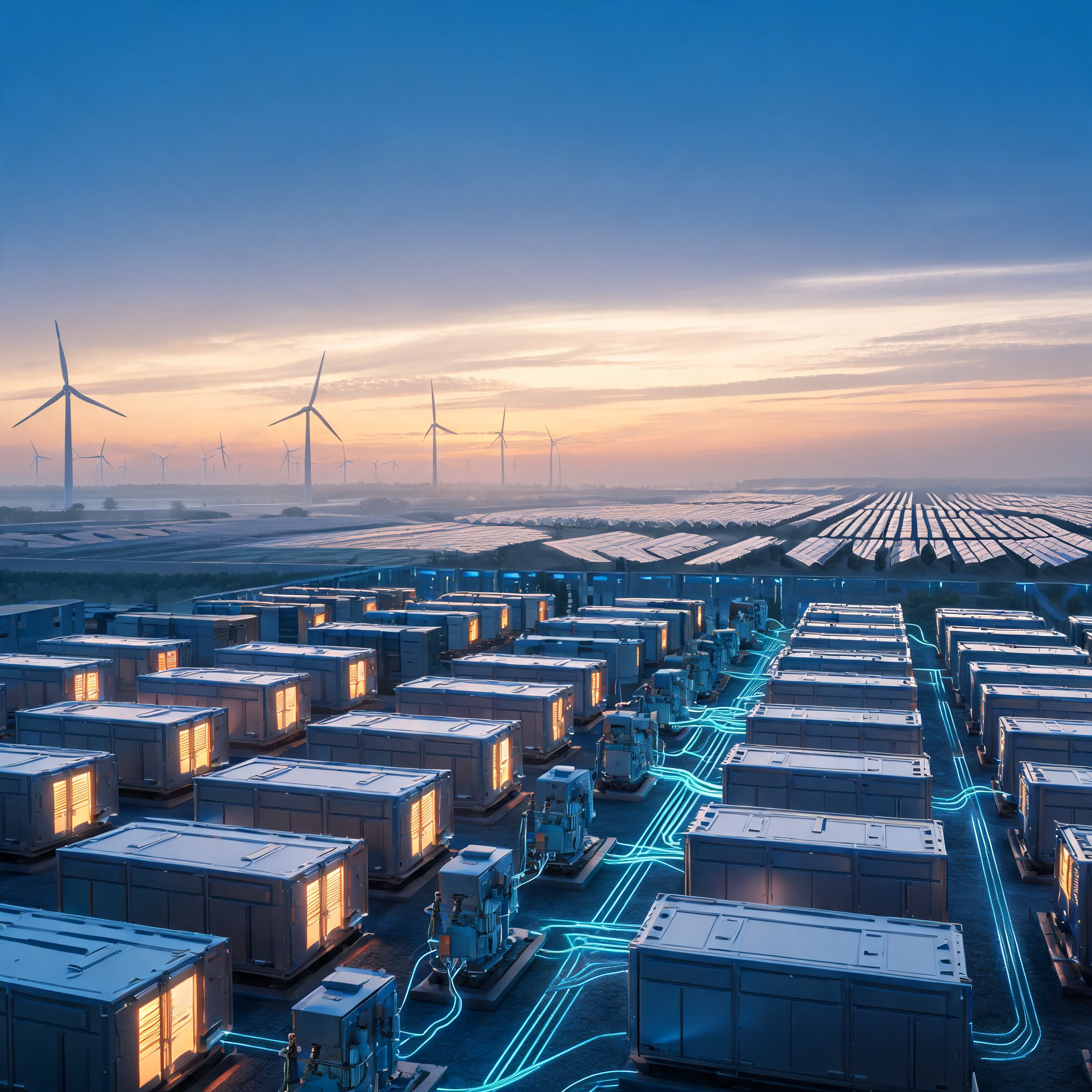
China’s operational new-type energy storage capacity reached 167 GW/435 GWh at the end of September 2026, up 63% from a year earlier, according to National Energy Administration figures presented at its quarterly press conference on Oct. 30. The category covers electrochemical, compressed-air and other emerging storage systems, but excludes conventional pumped hydro.
At the end of 2025, capacity stood at 135.93 GW/351.12 GWh, indicating a net addition of about 31 GW/84 GWh during the first nine months of 2026.
Duration and utilization edge higher
Average storage duration rose to 2.61 hours, an increase of about 0.27 hours year on year. Equivalent utilization reached roughly 915 hours over the nine-month period, about 10 hours more than in the same period of 2025.
The NEA said the gains suggest that China’s storage expansion is being accompanied by gradual changes in system configuration and utilization, rather than growth in installed capacity alone. It attributed the development to government policies, technological innovation, industrial supply chains and rising demand for flexibility in the power system.
Renewables increase the need for flexibility
China’s combined wind and solar generating capacity exceeded 2.01 TW at the end of September, accounting for about 48.7% of total installed power capacity. As variable renewable output expands, storage is increasingly needed to absorb surplus electricity, shift generation to higher-demand periods and provide fast-response grid services.
Market structure shifts
Official figures for 2025 showed that independent energy storage facilities accounted for 51.2% of cumulative new-type storage installations. Projects rated at 100 MW or above represented 72% of installed capacity, while systems with durations of at least four hours made up 27.6%.
Lithium-ion batteries remained the dominant technology, at about 96% of installed new-type storage capacity. Compressed-air, flow batteries and other technologies are gradually expanding their presence.
Market reforms are expected to reinforce these trends. China has been developing arrangements that allow independent storage operators to earn revenue from electricity trading, ancillary services and capacity remuneration, gradually reducing reliance on mandatory storage requirements linked to renewable projects.
2030 target and regional example
Under the 15th Five-Year Plan for power system development, new-type energy storage capacity is targeted to reach 300 GW by 2030, with greater emphasis on longer-duration systems, grid-forming capabilities and improved operational efficiency.
In western Inner Mongolia, the grid operator reported 20.23 GW/70.47 GWh of operational storage capacity in October. During emergency dispatch operations, storage supplied up to 12.25 GW, equal to 33% of the grid’s electricity demand at the time.
Such examples illustrate how storage can provide substantial short-term balancing capacity in electricity systems with high renewable penetration. For other countries expanding wind and solar generation, China’s deployment offers experience in large-scale storage manufacturing, grid integration and centralized dispatch.